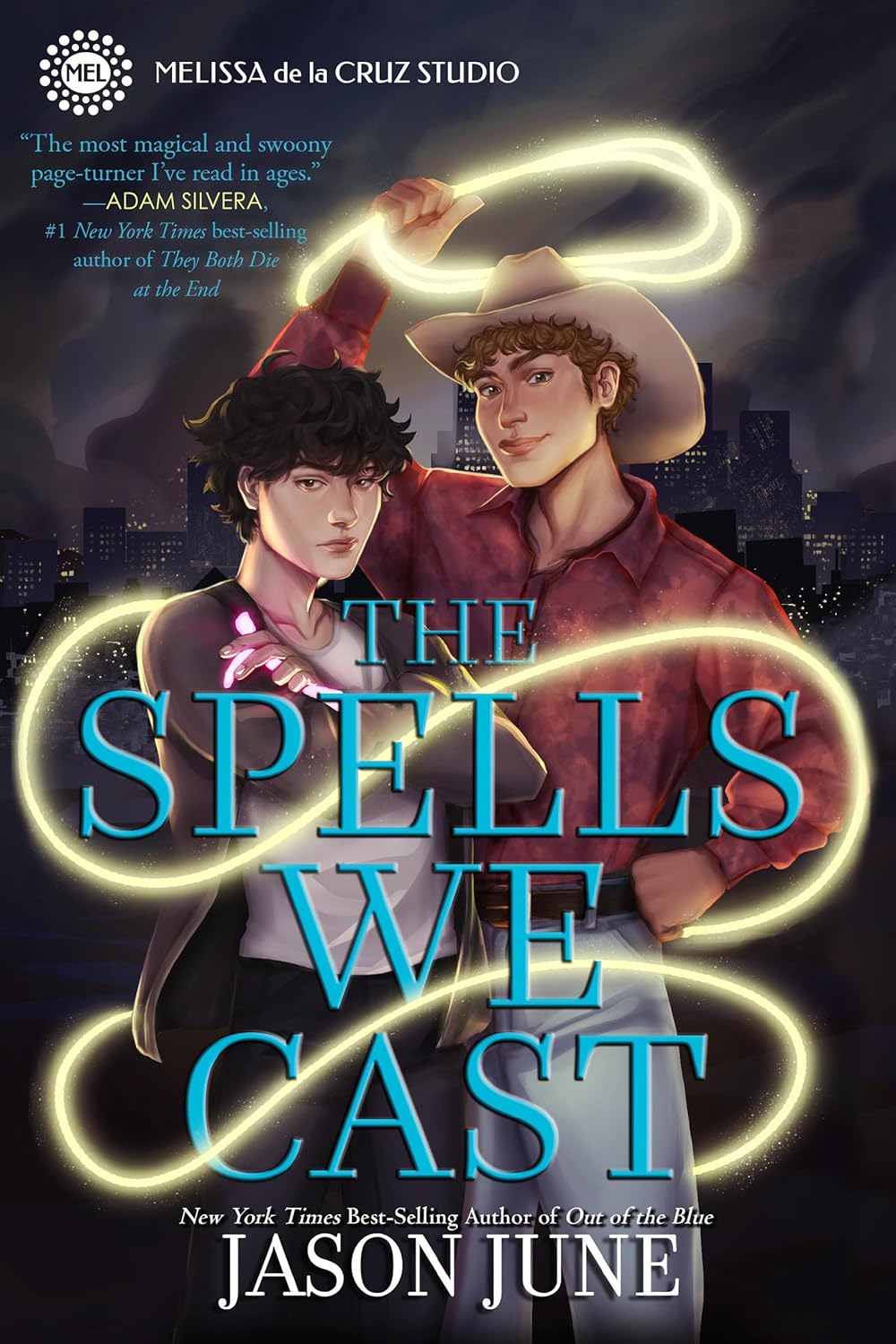
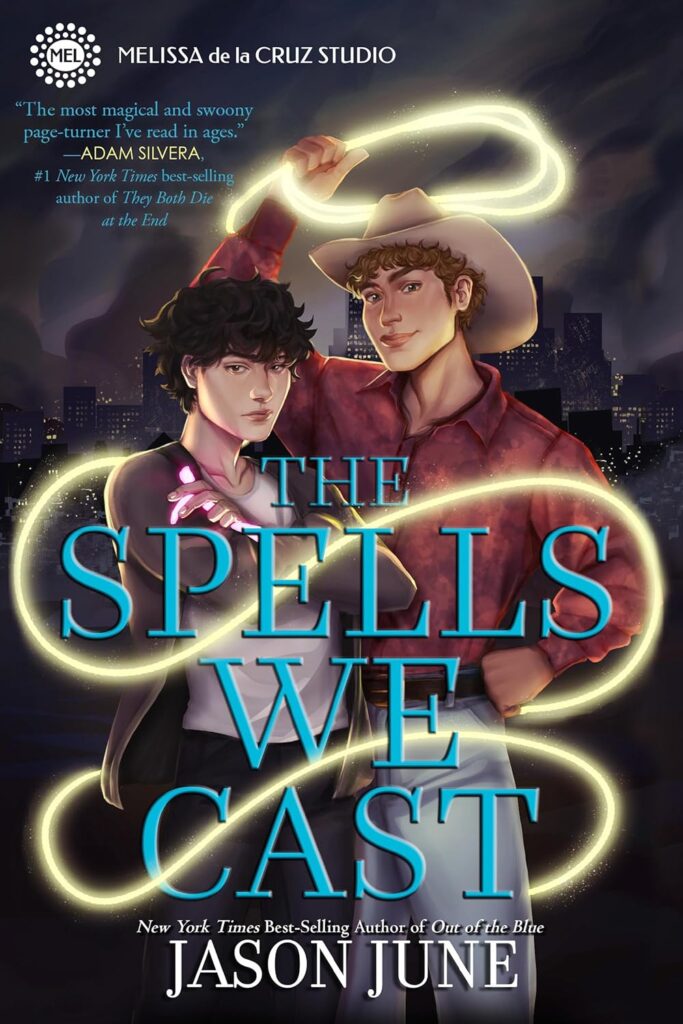
The Spells we Cast by Jason June
Let me put it like this. According to Libby this book has 741 pages (which is an insane length for a YA fantasy-romance), 600 of which are in the internal monologue. Some people might not see this as a problem, but I read books in order to escape listening to my own internal monologue. I don’t want to be stuck in someone else’s.
Which is a long-winded way for me to complain that this author needs to practise more showing. I watched a webinar a while back by an author who used the word ‘interiority’ to describe this literary tool. She advocated strongly for it’s use and went on to say that (in her mind) it counted as showing. And yes, it can be used to show feelings or ideas your POV character cant show. BUT, in most cases it get used to tell. Like, I don’t want to be told the character is angry, I want to feel the corrosive lump in their throat. It’s is a literary tool that is being painfully misused by many authors, this one included.
The book has an overly complex plot. There are just too many tangents, which leaves the book with a lot of loose threads and underdeveloped side characters, who are presented as if they are important (to either the plot or the main characters), but who receive so little page time that they become little more than footnotes to the story. I’m thinking of Ori’s mom, the third member of their group, and the big breakup that the story starts with.
In fact, poor character development compromises the whole book. The main characters have no meaningful arcs to speak of. They both yo-yo wildly in their moods and motivations. Like, Ori is cold and standoffish to Nigel, then warms up; then snaps back to cold, several times. There is no sense of forward progression in his attitude, he snaps back to square-one every time, and we get so little to work on with him that I don’t really know why he’s so bitchy to Nigel, or why those particular set-backs make him revert. Plot and character seem to operating independently of each other. The thing I found really annoying though, was Nigel constantly bouncing from blaming himself for the trouble (which let’s be honest he should not be taking this much responsibility for) to a positive and resourceful ‘lets fix it’ and back to ‘its all our fault’. Like he must say some variation of the latter dozens of times in the last few chapters.
I did laugh out loud, when the author put a ‘soulmates who share memories’ trope in his book, but then takes a full page to stand on his soapbox and lecture the reader about how preordained love doesn’t exist and they still need to work at it. Like, my guy, if you don’t believe in soul mates maybe don’t put it in your book.
And then finally, one of the slowest, most dragged out climaxes I have ever endured (I know how that sounds – stop it). The author was so desperate to manufacture a cliff hanger ending that he shoe-horned the denouement into the climax. So that in the middle of an epic battle with every possible thing at stake, we have time for long conversations and internal monologues, for resolving family fights (Ori’s mom again – considering she never speaks to either of the main characters in the book I don’t see why I was supposed to care about their relationship). It was just so unsatisfying.
File under Glad I Didn’t Have to Pay for it.