
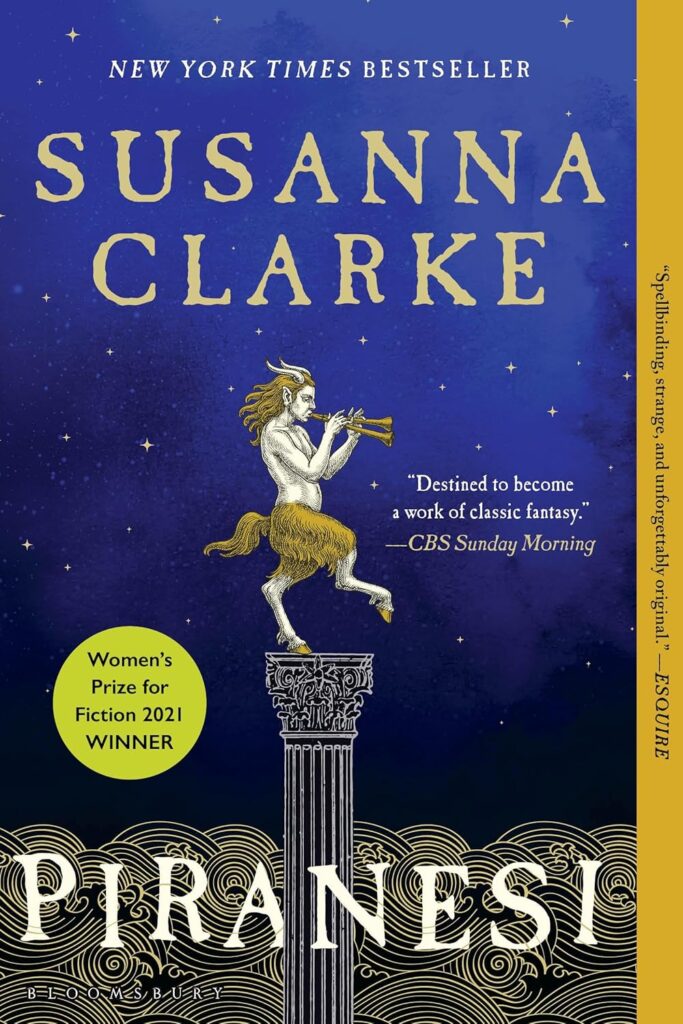
Piranesi by Susanna Clarke
This book was fantastic – I absolutely gulped it down, and then down again.
It’s a captivating place and a captivating character and the mystery builds step-by-step so you don’t want to walk away.
Craft Notes
Structure wise, the plot really only gains momentum near the end of the book, but the mystery of the place and its inhabitant and the gentle bread-crumbing of a wider world than Piranesi is aware of does a very fine job of holding the reader’s attention. It’s one of those stories where you pick-up the clues and develop your theories, and you are just waiting to see if your guesses are right – aka the perfect mystery.
Clarke cleverly hooks the reader right from the beginning using an action scene of Piranesi nearly being caught out in a flood – giving the reader an interesting character to care about and a dangerous setting to worry over. That incident has no other importance to the plot, except perhaps to foreshadow the climax. But damn, does it draw the reader in. This is a way of following that adage about opening with a good hook, inserting a scene that might not be part of the cohesive story structure but works thematically.
I delighted in Piranesi’s clear and enchanting voice, but what I found really evocative in Clarke’s writing was that you can even hear Piranesi’s voice in Matthew and visa-versa. It is not at all difficult to believe these are all iterations of the same person. That is remarkable characterisation.
Another craft note, that again I don’t entirely understand, was the strange use of Capitilisation Piranesi uses. I suppose if I went and transcribed it all out I might see the pattern, but ain’t nobody got time for that.
What it all means
I will admit, like Shadow of the Wind, a lot of the meaning of this book sailed right over my head. Like I could tell it was meant to mean something, but buggered if I know what. But unlike Shadow this book doesn’t let the metaphorical swamp out the story.
For example, there is an entire chapter devoted to the albatrosses. They make absolutely no difference to the plot, and yet they don’t feel out of place or extraneous, perhaps because they are revealing Piranesi’s character and further developing the world, while telling the reader whatever it was I missed. I think the other key feature was that Clarke maintained their importance, she takes the time to go back to them later when Piranesi is preparing for the flood and at the end, so that whatever else they meant, their importance to the protagonist is not thrown away.
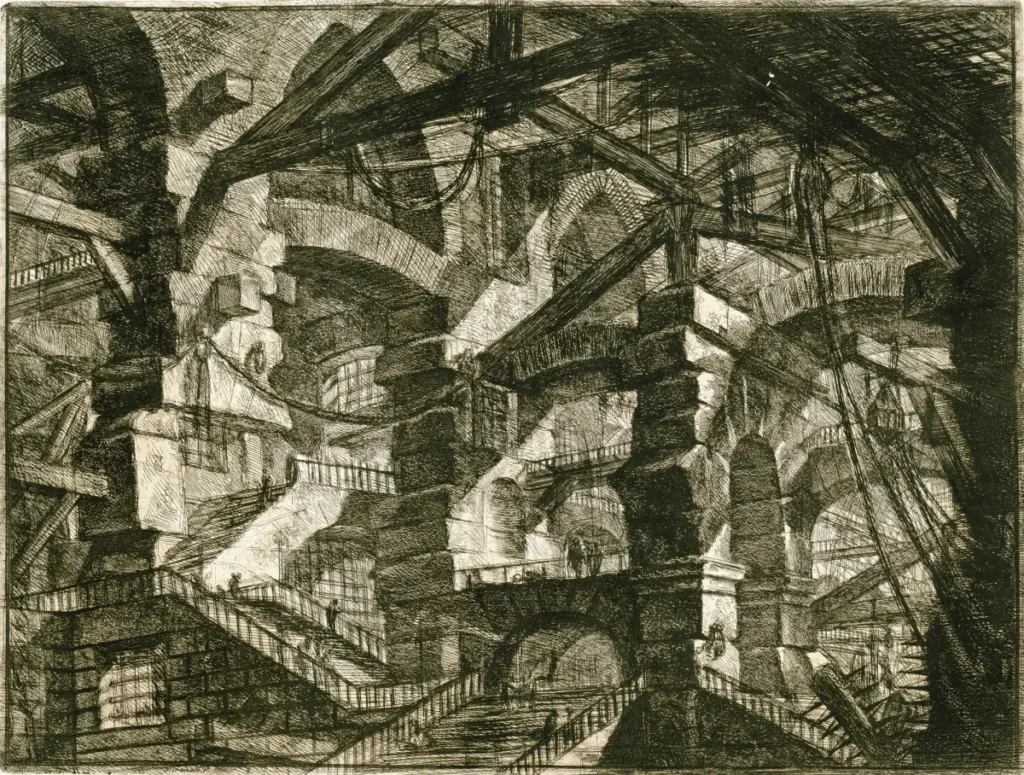
And then there is the Labyrinth. Ketterley described it as:
a vision of cosmic grandeur. A symbol of the mingled glory and horror of existence. Where nobody gets out alive.
That seems to me like a metaphor for the world and the perils of trying to live in it.
But I always found the labyrinth to be at odds with how Piranesi described it:
the beauty of the House is immeasurable, its Kindness infinite.
This quote frames the book (at the end of the first chapter and as the last line). BUT the house if full of dangers. Are kindness and danger somehow the same – not one without the other?
There is another quote that I think summed up the plot and certainly seemed to explain the two academics (antagonists):
if ever we discover the Knowledge, then it will be as if the Value has been wrested from the House and all that remains will be mere scenery.
And if that isn’t an explanation for the human condition I don’t know what is.
Also, while we are here, I loved the depiction of Arne-Sayles and Ketterley. Self-absorbed, entitled, obsessive, egotistical monsters. I complained about Teras not reflecting the evils of academia in a way I related to, while these are chilling real academics (although, to the best of my knowledge, none of the academics I know have committed kidnapping). I particularly loved how both insisted he was better than the other while being remarkably similar. It was just stellar.
Another mystery was what the statues mean. I’m not sure if they were meant to be metaphorical or if they were cultural references – I caught the Narnia one, so I don’t know if I missed others. Or are they both? Does each visitor to the labyrinth experience different statues? That seems likely given how at the end Matthew describes how the statues are analogues to people and situations he meets in the ‘real’ world and how he sees in strangers the faces of his statues.
I cant help feeling that the labyrinth is a metaphor for the internal mind. Endless and interconnected and filled with representations on which we scaffold our expectations of the world. A place to retreat to when the exterior gets too much. Full of both wonders and dangers in equal measure, whose value cannot be extracted into a formula.
Consider the way Matthew describes his time there:
the sea sweeps through the house. Sometimes it swept over me but always I was saved.
If that isn’t a description for depression and recovery I don’t know what is.
And at the end, the labyrinth feels like it’s just on the other side of those falling snowflakes, never more than a breath way. Maybe, like Narnia, it’s only a twist of the mind away.
So this is probably not a particularly coherent discussion. I cant say I understood Piranesi, but I do feel enriched for the reading.