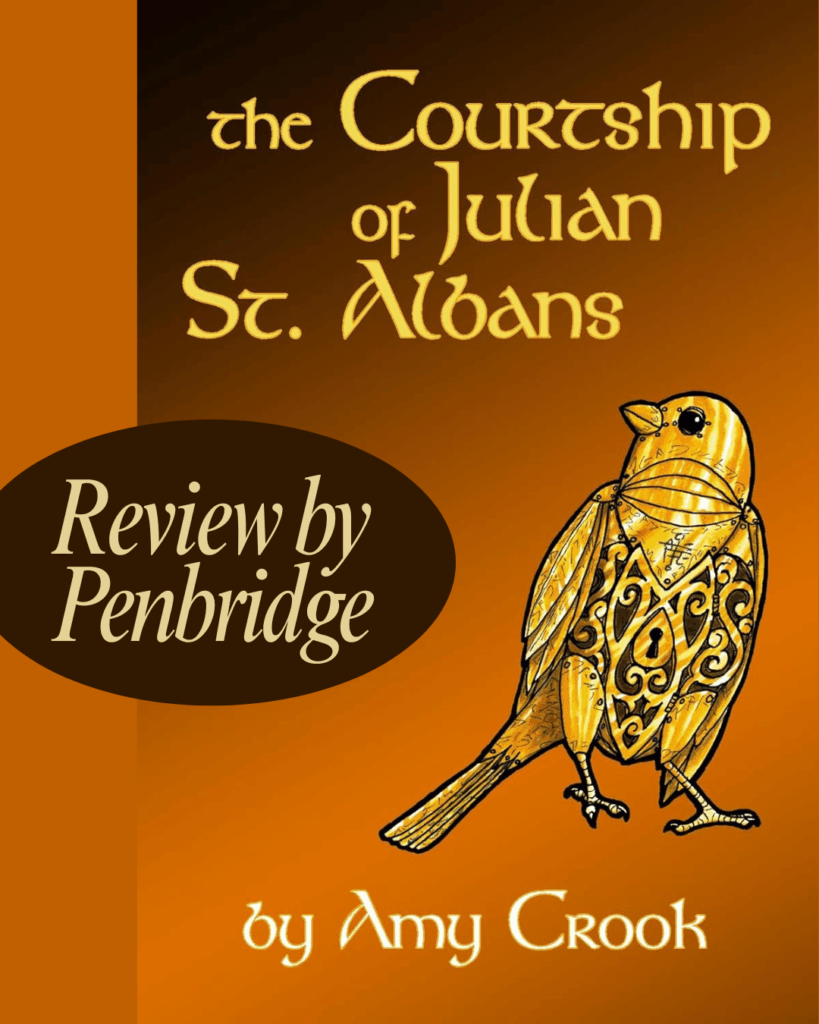
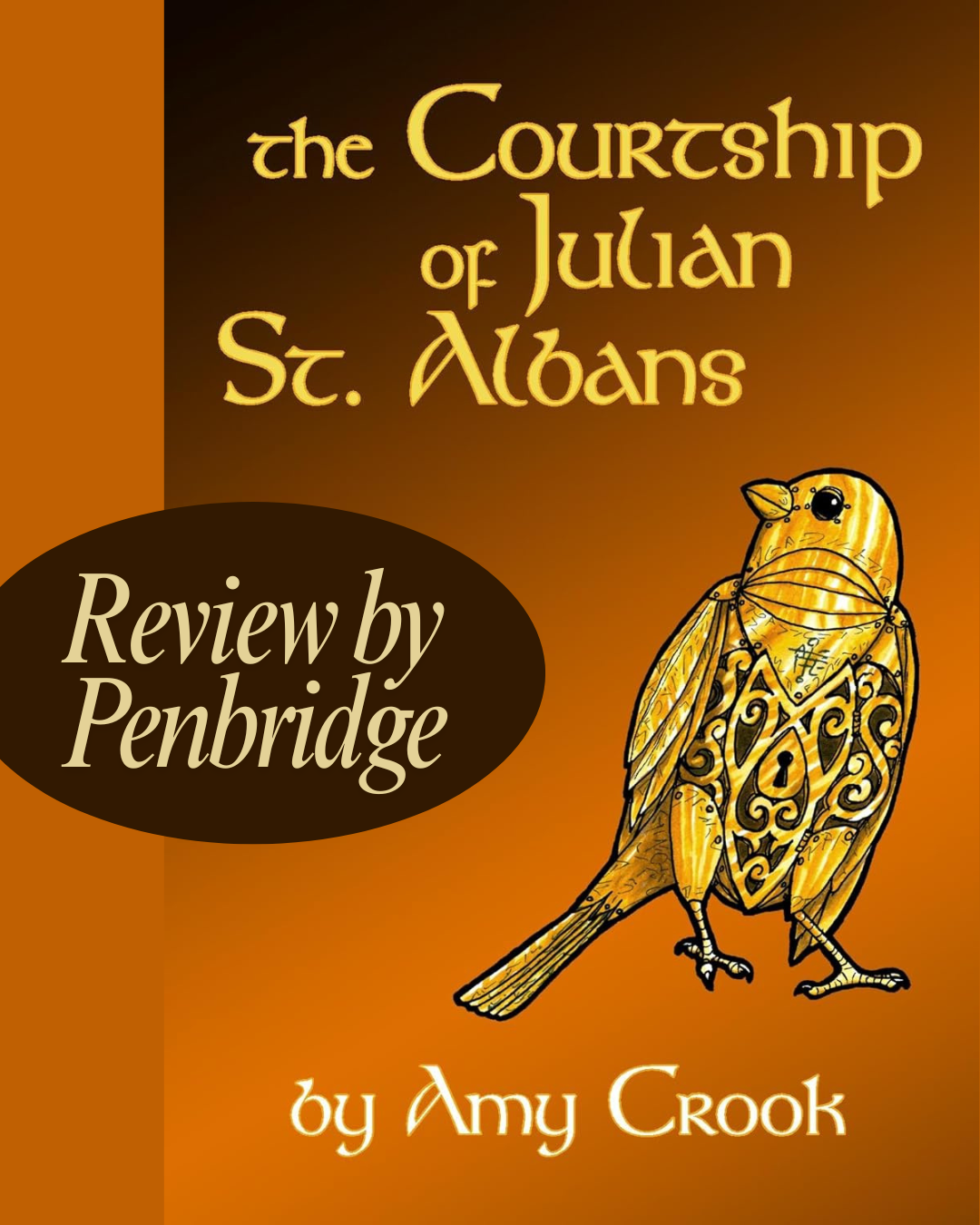
The Courtship of Julian St. Albans by Amy Crook
Is it absurd to be be undone by the Sunk-Cost Fallacy for a book?
Have you ever read a book where you have gotten 200 pages in and just been like fuck, I don’t want to read this anymore. But at the same time you have been like Damn I have already read a whole book’s worth of this shit, wasted substantial hours on it. So I am going to finish it just to prove something.
Don’t ask me what I proved, or who I proved it to, because really was the one addition to my book count worth it? No it absolutely was not. Maybe I just needed a win that day.
This book was particularly disappointing ‘cos it started strong but then just got lost in the weeds.
Like I enjoyed the main character and he had a clear and rather engaging voice. I wanted to see how this misanthrope finds love. The premise was an interesting take on the arranged marriage trope, and the queer nature was built in better than some other books I have read. Further the anachronistic world and the magic worked really well. They were interesting, entertaining and consistent in their use (mostly).
But this book really lost the plot in the middle – and I mean that literally.
For one thing, the author loves her some food and fashion, half the bloody book is orgasmic descriptions of both. For example, every meal in a seven course dinner gets an entire page of description. I cant tell you how boring this is for a person with a sublime disinterest in food.
Then the book spends most of its run time on the extraordinarily mundane. Cuddles and cooking, and more cuddles and more fucking cooking. I’m not saying stories can’t have these things, but can they mean something please? Can the fucking characters have worked for them? Can we have a strict fucking limit on them?
It’s strange, in the end the guardian characters and even the damn chauffeur get a great deal more page time than the love interest. And while I get wanting to give the main character the chance to make friends their importance totally outweighs the rest of the story.
I also find it strange that the author put in these side characters who basically exist to care for her main character – like does she not think he can take care of himself? And that was one of the problems with the later part of the story, the author stole all the agency from her own characters. The conflicts were fixed by side characters or moved out of the way. Think about how the whole Courtship was just nullified at the end on the basis of a remark from one of the guardians – not only undoing the entire premise of the story, but it didn’t even come from one of the main characters. Like why would you do this? Are you saying you thought the premise of your own story was stupid? Because you have just completely wasted the reader’s time, being invested in how to make this relationship work despite the problems with how it was started.
You may have noticed that the love interest has played no part in my discussion so far. That reflects how much importance or page time he had in the damn story. Like Julian as a character was just a blank space. I really can’t tell you anything meaningful about this character. I cant work out what our man character was meant to see in him that made him fall in love. There was honestly more chemistry with the damn doctor. It’s funny ‘cos the theme of the story was that Julian was a person rather than an pretty object to be admired and won, but it then treats him as just something to be admired.
The author does eventually remember she has a story to finish, but she compounds the loss of agency of her characters by failing to setup the ending properly, so that the solutions lose all emotional weight. Only one of the villains is set-up and his motivation is rather weak. While the other one comes out of nowhere but does at least have a plausible motivation. Also I couldn’t help but notice that the whole thing could have been solved much, much earlier if the main character had just prioritised his damn job and used his magic on all the suspects right away, instead of waiting for the finale. Further, the magical manner in which the villain is caught comes out of nowhere, the reader has no idea this magic is possible and it was both confusing and highly convenient.
And having undone the premise I don’t see what the follow-up books have to offer.
I know I’m being mean, the writing style was quite nice, with less reliance on the interior monologue that other books in the niche. And its my fault for pushing through once I realised it wasn’t working for me. And the acknowledgements do indicate this was the author’s first published book. And I know there is a massive appetite for cinnamon-roll stories, by an audience that cares more for vibes. But god, editors exist people.
So I will not be chasing the next ones in the series.
It’s sweet and soft and dull as ditchwater.