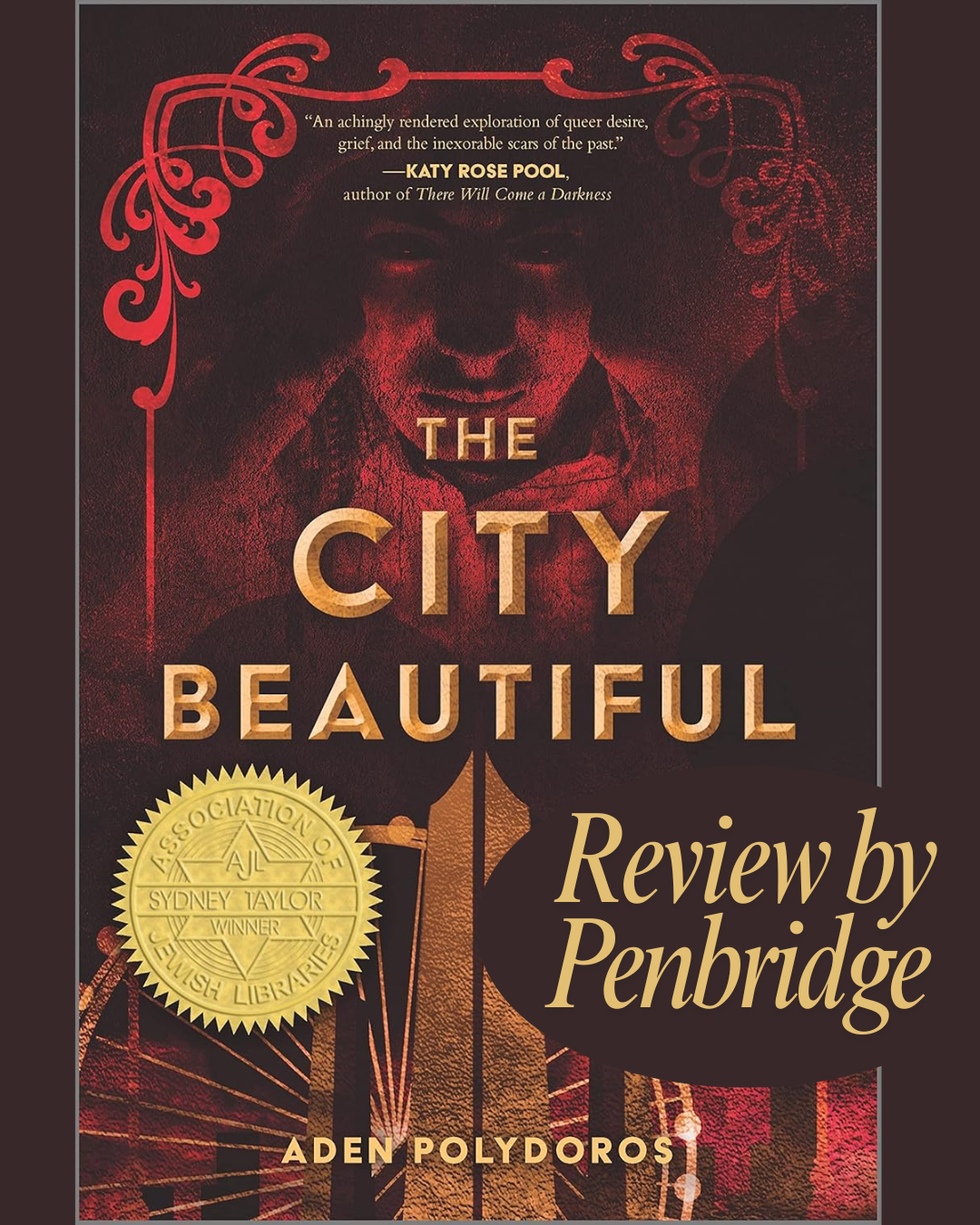
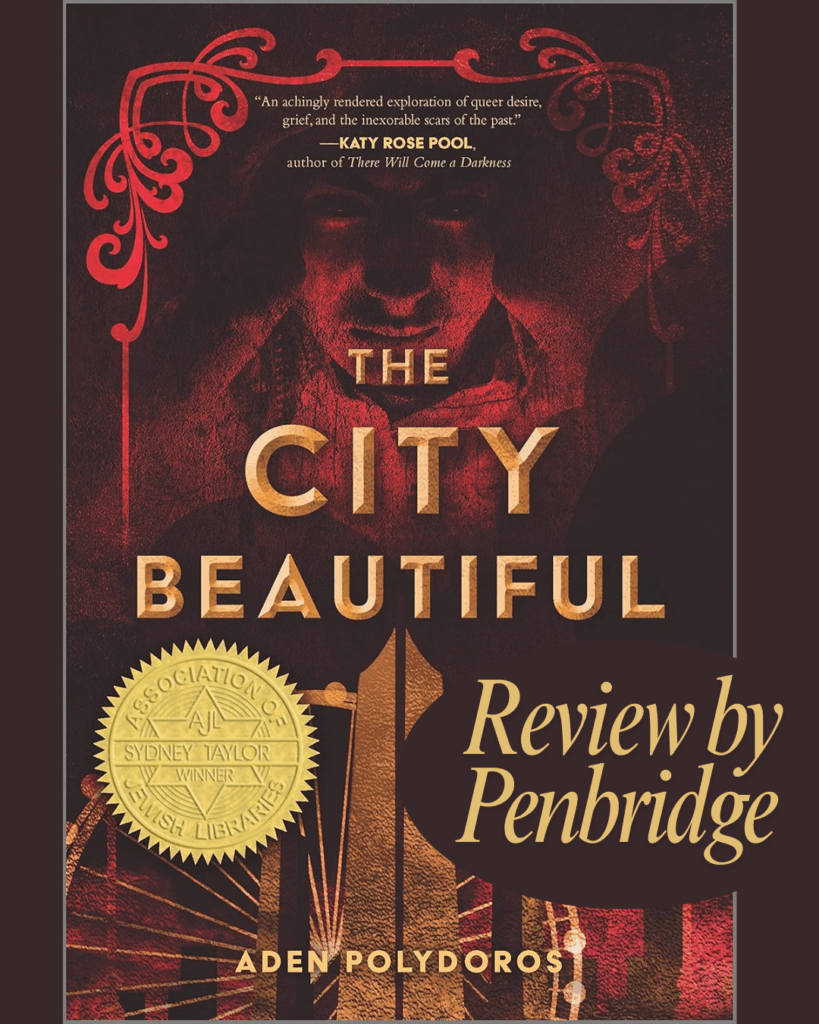
The City Beautiful by Aden Polydoros
To put it simply this book was trying too hard. There were just too many themes and too many topics for the reader to ever really feel any of them properly.
Cultural Reconection
I enjoyed the intensely Jewish setting of the story and it was fun to see all the yiddish, to relearn a lot of words I had forgotten, but even I was struggling to keep up what it all meant. I imagine it must have felt impenetrably dense for a lot of readers. Personally, and especially given that the two main characters are queer, I would have liked to see more of an exploration of jewish culture and religion against those experiences. The book seems to focus more on general societal cultural perceptions. This book never actually tells us if homosexuality is a sin in the Jewish faith (yes, but most modern congregations downplay so as not to alienate the more secular parts of the community – blind eye territory).
The Romance Collapses
The most egregious – added on but not explored detail – part was the queer romance. Yes I am overly attached to the romance aspects, but it’s one of the first things introduced in the story. It started out well with good chemistry and an intriguing love interest, but then just fizzled out. The romance arc gives nothing to the plot and the plot little to the romance. So the relationship never really gets developed. Nor does it help develop Alter as a character, for example after the ‘I love you’s’ all Alter’s fear and internalised homophobia evaporates completely – a completely undeserved easy fix. I wonder if this started as a romance and then got overwhelmed by the heavier messaging?
I also feel like Frankie was never all that fleshed out as a character – or maybe it would be more accurate to say that he doesn’t change as the story progresses. He is essentially the same man, with the same beliefs, at the end as at the start (even his feelings for Alter don’t change). This also means his sudden change of heart about the work he does and his future feel entirely unearned – and out of character. Nor do I understand how information brokerage was supposed to keep him and his entire team of urchins in food and clothes.
But the real problem with him and his part in the relationship is basically that he is entirely too nice. Like there is a heart of gold and then there is authorial convenience. For example, when Alter runs out on him after an evening of intimacy, and later insists that it was just playing around, Frankie is totally cool about it. It was very hurtful and Frankie has no anger or hurt over it, really? He puts up with an endless barrage of shit from Alter, and constantly backs him in situations where it really feels like he should have more autonomy, or be more commanding. He is a strong character who is running his own crime ring, he should know how to stand up for himself, in relationships and out of them.
Thematic Confusion
The ghostly possession is also a problem in the story because it keeps being forgotten. It’s the framing for the story’s urgency but we get very little sense that the dybbuk was overwhelming Alter, or that he was inches away from losing himself, it never really feels like it’s driving the plot. And how nice once the bad guy is dead the ghost itself proceeds to try to escape – what a polite ghost.
Structurally, the biggest problem with the book was probably the red herring. It was obviously not the solution of the story (since we were only midway through the book). But the real problem with it was that this plot arc has no bearing on the rest of the story. You could have removed the entire slaughterhouse district and you would basically have had the same book. We put so much work into this mystery and it has no further action in the story (a brief mention in the epilogue). I resent spending so much time on something that contributed so little.
The other problem is that this false climax confuses the themes. Like it leads the reader down a path towards stratified economic inequality and the incredibly poor living and working conditions of the poorest. And then dodges hard left after the slaughterhouse business.
Because the other big theme (the main one) of the book, was the World’s Fair. It’s in the damn title after all. The exploration of the surface level beauty of the White City and its darker, (often) racist underbelly. This as a metaphor for what America was at the time (and arguably still is). Publicising itself as this beautiful shining place, calling immigrants from all over the world to come build a wonderful life, then crushing those people under her heels when they get there. The problem with this theme is that we spend next to no time in the White City. It just gets lost in the clutter.
The funny thing is, the themes actually complement each other, but they needed to be better intertwined so that the reader could understood them together.
To me the book felt a bit rushed after the false climax, with the author’s voice frequently shining through and overwhelming Alter’s. Things like talking about Frankie’s trauma – would boys in this time and context use that word? And frankie’s insistence that Alter had no right to know what had happened. In principal I agree, but nobody was suggesting that in the scene – it was the author soapboxing. The author stops to preach quite a few times from this point onward.
Okay, clearly I had a lot to say here, much of it negative. For me it started well but got a bit lost in its own importance. The writing style was lovely and I enjoyed the Jewish setting, but it needed a more cohesive vision.
I think this was a debut, so I’m not ruling out his later stories, but this one didn’t bite.