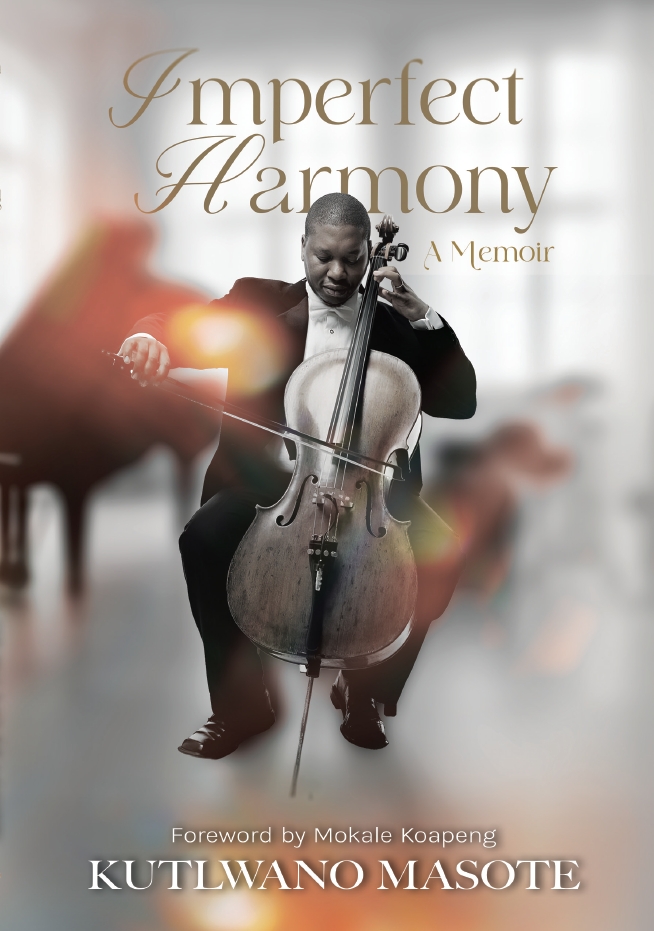
Imperfect Harmony by Kutlwano Masote
This book is basically everything my writing teachers tell their memoirists not to do. I’m not surprised he struggled to find a home for it, although unlike him I don’t believe the ‘niche’ subject matter was the problem. And is classical music really that niche? Jilly Cooper wrote a bestseller set within an orchestra, there was an entire radio station devoted to it in this country.
A Memoir is Still a Story
No, the problem was, this book is simply a chronological account of the author’s life, and absolutely nothing more. It’s a long series of anecdotes strung together.
It was, in a word, boring.
The problem is, there is just no emotion on the page, these are dinner party stories. For example, there is a whole chapter devoted to how he became a conductor with a long lead-up to his first concert. The concert itself is described thusly:
We killed it.
No other details. No description of how he felt walking on stage, or trying to manage this beast that was an orchestra, or of the audiences reaction, or well anything at all.
If your protagonist doesn’t feel invested in their story, then why would a reader? Interesting settings and premise can only get you so far. A good memoir takes the parts of a life to draw an arc, a life lesson the protagonist learned, a understanding the reader can take away. Readers want to feel changed by the stories they consume, otherwise they might was well listen to their spouse complaining about work.
Someone is going to be offended
The other major mistake the author makes is in trying to please everyone. This is classical music, theatres, radio stations, orchestras and ensembles. Drama abounds, except in this book where our protagonist ties himself up in knots trying to show people in a nice light. Frankly as a outsider I would rather have the dirty drama, and the obvious dodges around it become disappointment, become irritation.
For example, on describing recovering from a breakup he says:
So, I had a fling too close to home that damn near caused a revolution at IMMA. That is about all I can say about it, but it pleases me that all was forgiven, after a while.
And now I’m wondering what the hell that means. Did he have an affair with another musician? Someone much younger/older? His married landlady? What exactly? Also this incident was 30 years ago, in Switzerland, who’s reputation are we trying to preserve here?!
As an established author noted in a workshop I recently attended – you cant write a memoir without pissing someone off. You cant write your story if you are constantly censoring yourself for the sake of the feelings or reputations of others.
In the famous words of Anne Lamott (Bird by Bird):
If people wanted you to write more warmly about them, they should have behaved better.
I also need to mention the egregious name dropping, details given of events that are entirely irrelevant to anything, except in proving that the protagonist knows this person or was at this event.
Honestly, I tried hard with this one but I just ran out of energy to finish it. I read about the radio and conductor parts, those were all I was really interested in.
What I am looking for when reading niche stories is that immersion in the systems and cultures outside my experience. Jilly Cooper’s books may be trashy (I dont agree, but it’s a common complaint) but by god you know how an orchestra works by the end of it. This book disappoints by merely skimming over its own setting.
In its defense, the author’s voice is pleasant and engaging, and there are some interesting settings. It makes for a easy, enjoyable read if you dont want to invest any emotion in the story, but just coast along. I’m not really sure who it is written for but I think music aficionados will probably enjoy it.