Editing and the Publishing World
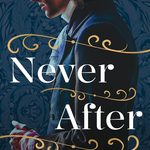
Previously, I complained in excruciating length about Never After.
Only to later read a article by KJ Charles who managed (while talking about an entirely different set of books) to distil my complaints into a simple explanation:
The ultimate reason both books were bad was that they read like first drafts, with good ideas not yet coagulated into a plot, elements that had been chucked in but weren’t fully incorporated, and characters that were visibly acting according to the demands of the plot, rather than shaped so you felt their actions were natural.
While she uses the topic as a jumping board for a writing tutorial, I find myself wondering why is this happening?
The authors Charles complains about are both “experienced authors and issued by large publishers”. Yet the books did not receive basic developmental editing. Hall is also an experienced author who often works with an editorial team.
Something (it seems to me), must be rotten in the state of Denmark.
What are publishers For?
Now, I should preface this discussion by noting that I do not have any personal knowledge of the publishing industry, I have never worked for a publisher, I have not had a book published.
Perhaps, a good place to start, is to consider what it means to be published. Why in this age where self publishing is so accessible, and can be lucrative, are publishers still even a thing?
Well, originally, publishers existed to provide capitol for the printing, to get your book into stores and to provide expertise for book design and marketing. They still provide these functions to a greater or lesser degree. Although many authors find themselves having to do a lot of their own marketing. But for those books they deem worthy, publishers can get your books into mainstream media in a way you will probably never be able to.
And in exchange the rat bastards will take 90% of the commissions. Yes, you heard that right, typically author royalties are 10-15%, 25 if you are Stephen King. Sorry for you, neh?
So, why do people still submit their books to publishers?
Some, because it is easier to have someone else chasing up printers, and commissioning artists, and drawing up marketing plans, while they get on with the next manuscript. Or because they want or hope for their book to turn into a best seller. But I think more than anything else, people do it because they think that is how the system works, because they want to be able to say I have been offered a book deal. There is a status to publishing that every author, even those earning six figures from their self published books, desires.
But why? There is (almost) nothing a publisher offers that you could not do for yourself.
Because it’s hard to get published. Because getting published is about getting past the gatekeepers. It’s an outside voice who says yes this work is worthy. Makes me think of the art world in many ways. What differentiates a painting in a gallery from the same subject matter in a curio stall?
Because, traditionally, you had to show a publisher that you were good enough. A publisher was responsible for the quality of the work they put out in the world. Being published meant your work was quality, you as a person was quality.
Why are Publishers Failing at their jobs?
But in light of the discussion I started this with I have to ask whether any of that is relevant anymore?
We have all been hearing – basically forever – that publishing is dying, people don’t read anymore, the industry is going to collapse, blah, blah, blah. Is it true? Is it because of the reasons people say? I cant really tell you. Except that publishers continue to exist, books continue to come out, money continues to be made. Maybe the problem is far less about a lack of readers than corporate consolidation and end stage capitalism?
The other thing I think we lose track of, because publishers WANT us to lose track of it, is that these businesses are not about, not interested in, literature. They exist to make money. Every decision a publisher makes, from who to sign, what genres to carry, what images should go on the cover of the book (oh, you thought that decision went to the author? Think again), are about how to make other people purchase the book.
That last part is important. It’s not about the reading experience or the book quality. It’s about getting people to part with their money.
I had this experience a few months back. A visitor came to the house, she was perusing my shelves and noticed my copy of The Priory of the Orange Tree by Samantha Shannon.
“Oh,” she says. “This was had such cool vibes, but I struggled to finish it, Im not sure why.”
To which I responded. “Because the pacing was dreadful.”
She looked at me like I was mad.
Because the only thing she was interested in, the only aspect of the book she had considered important, was the vibes. It was for the book to tick a bunch of trope boxes, to carry the correct social kudos. And I promise you the publisher or commissioning editor who picked this brick out of the slush pile was clearly aware that their audience thinks like that.
I read this tome before starting this blog, but you should know I got 200 pages in before giving up in disgust. It’s basically everything Charles described above – in 800 pages. It’s 500 pages of waffle – nobody should be subjected to this particular torture, yet it remains hugely in demand
I think one of the things the internet has shown us – with the rise of fanfiction and the like – is that readers are not necessarily all that discerning. And publishers quickly picked up on this. Think about Fifty Shades of Grey, which started life on a fanfiction site. Before, no publishers would have touched it with a ten foot pole, in part for the subject matter (gatekeeping), but raunchy books are printed by specialists. No, they wouldn’t have touched this because the writing was terrible.
Another not entirely relevant example, which I feel encapsulates how publishers view their market. I get the Reactor newsletter, previously Tor.com. And every time it lands in my inbox I roll my eyes. Because the entire newsletter will have maybe 2 articles about books. A bunch of literature listicles (5 of the best fantasy books featuring [obscure trope]). And the remainder – the majority of the newsletter – will be articles about TV shows and movies. And really, I get why, it’s much easier to have a communal discussion about shows. But guys, you are BOOK publishers.
So, to circle back to our central question, why are big publishers putting out bad books?
I’m going to ignore the idea that editors are just bad at their jobs. I’m sure some are, but not in these volumes, and a bad editor should get weeded out of a position pretty quickly.
Some people like the narrative that publishers are too understaffed, so editors don’t have the time they need to devote to their books. Basically that things are slipping though the cracks.
But the cynic in me wonders about that. Are editors genuinely so overworked? Or has the publisher looked at the messy manuscript, weighed the state of the writing against the audience, against projected sales, against the time it would take for the author to rewrite something decent and gone: Just tell him its fine, let’s get it to print.
‘Cos from where I’m standing that is a better explanation than of what is happening here.
Quality and the Author
As for the authors. Are they merely relying on the editors to tell them where the book has gone wrong? Do they not have judgement of their own?
I will acknowledge that editing is hard. I am only starting to learn how to do it and its rough. To have to interrogate your work, to pick it part and write the same scene over and over again. It would be so much easier if someone just told you what to change.
But I have also seen, when getting feedback, that it’s hard to do that. There is no one pure, correct way to tell a story. It’s an art, not a science formula, so editors will often not respond to the places you think the MS is weak. Does that mean that spot wasn’t weak? Or that the editor was focusing on some other matter? At the end of the day, it’s your intellectual and creative work that is going out into the world – are you happy with it?
I also look at writers like Hall, who churned out roughly 3 novels a year since his major success, and I wonder if the problem was how much he committed himself to. I will be impressed if I finish my first draft in 1 year. Perhaps, he has not given himself enough time to give his work the development it needs. Maybe he’s so focused on the deadlines and the next up he has not even realised the way the quality has fallen off. Maybe he does know, but a contract is a contract.
I think there is something we can learn from this about understanding your limitations and giving your art the space it needs.