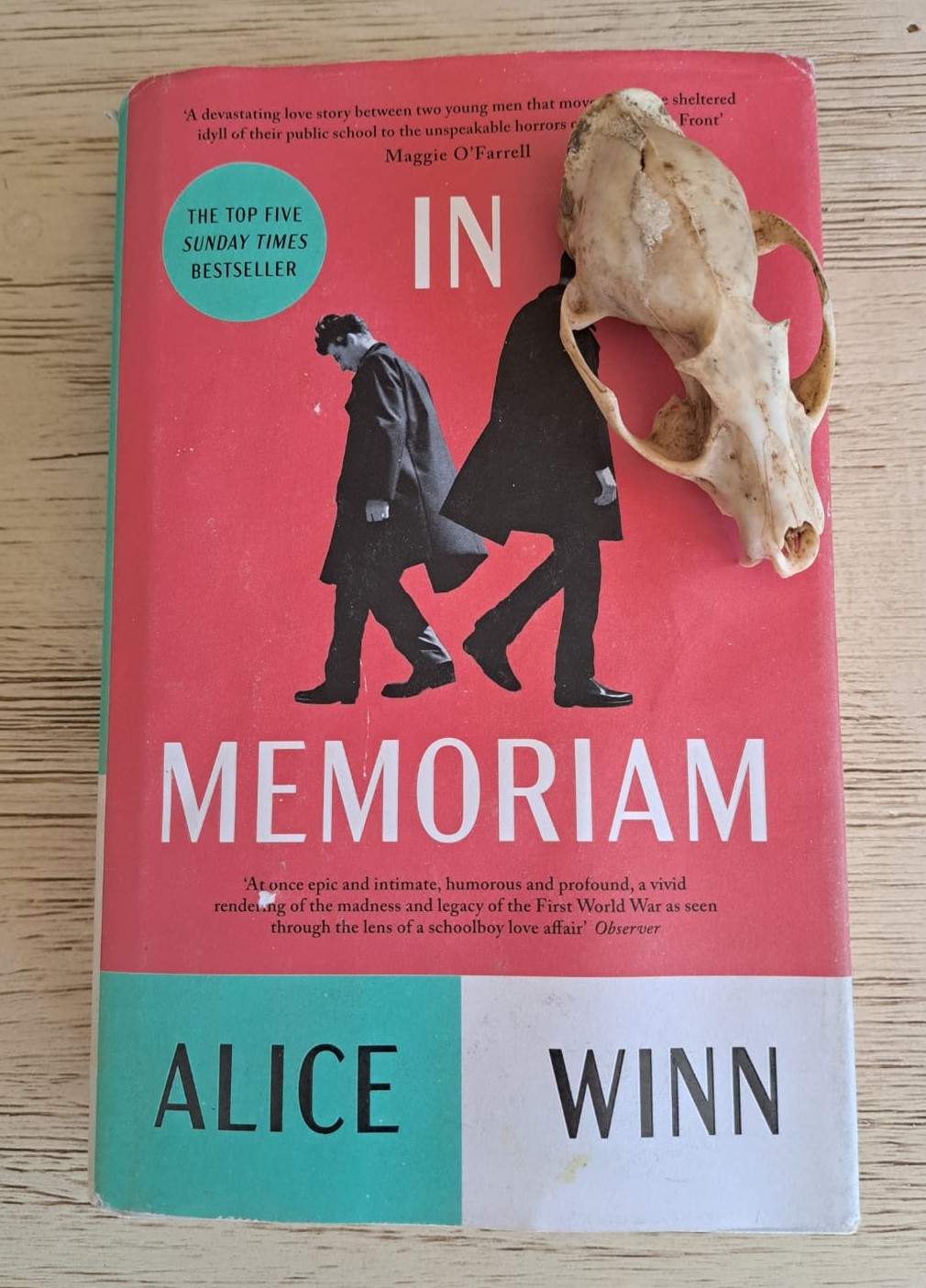
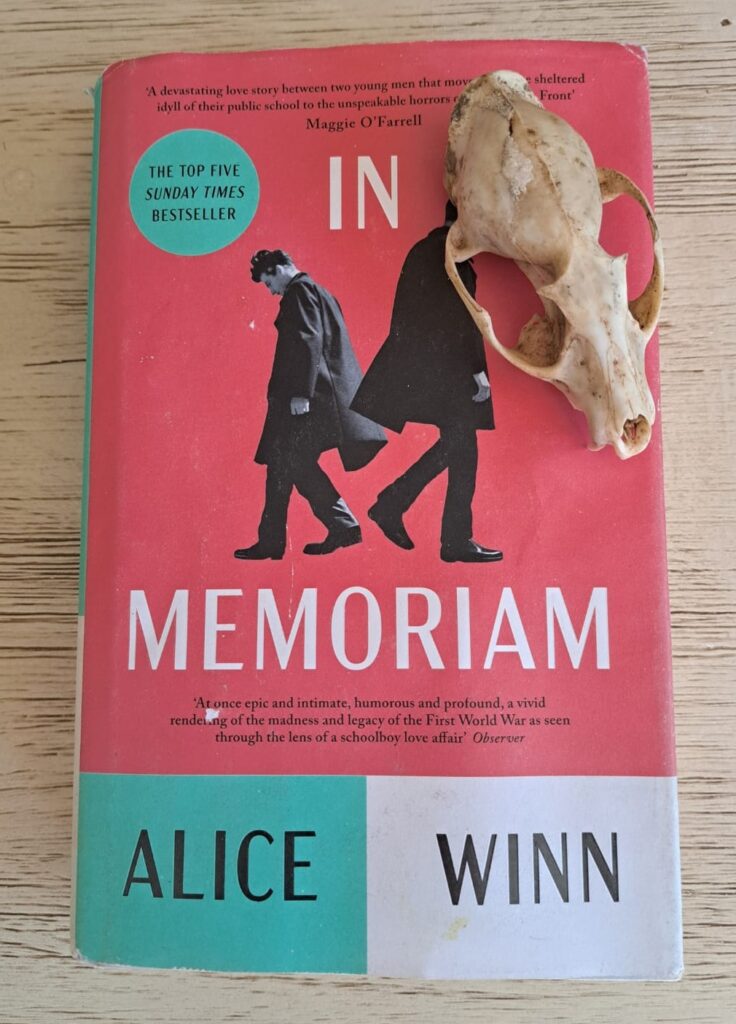
In Memoriam by Alice Winn
I don’t feel like this book delivers on its hype. But more than that I don’t think this book delivers anything new.
War Propaganda is Empty
At this point I don’t want another war is evil, the Great War was a global insanity, story. I want to understand what happened and WHY it happened. Especially when it feels like we are starring down the barrel of another great conflict.
I think part of my problem is that reading Mud, Blood and Poppycock has changed my view of the war. I am not saying that bad things didn’t happen, or that the author isn’t allowed artistic licence. But the view point into the war presented in this book is simplistic to the point of fantastical – bodies build into the walls of the trenches – and macabre.
This book presents itself as literary fiction, as a reasoned exploration of the war, taken from an under-represented perspective. But it reads as rather immature. It reads with the same nobody-could-have-been-this-stupid tone that I felt learning about the war as a teenager. But the Great War was more complicated that those horror-movie portrayals.
Why this Perspective?
It wasn’t just the propaganda though, this book purports to offer a unique perspective on the war by centering it around a homosexual couple. Which could have been a really interesting story, if the author had managed to follow through on it.
Because there is a lot we can learn from the story’s setting. English boarding schools with rampant sexual misconduct. The implications of attempting to live in a world rife with social homophobia, with law enacted against homosexuals. What it might be like trying to maintain a relationship under the harsh conditions of war time, the terror of knowing your lover is in constant danger. There is so much here to work with, and yet this book fails to delve into any of it. Which makes me ask what the purpose, the underlying message of the book was? Why should I read this one over the thousands of others about the Great War?
Love or Death
Why is this book called In Memorium, and what does that mean to the underlying themes? Honestly, I think it drowns them out (in case it was unclear I have not read Tennyson’s poem, so I may be missing something here). Because this book isn’t really about the characters or the relationship, it about the horror and killing. The focus on that eclipses everything else.
Look at it like this. This book manages to cover Ypres, Loos, Somme, POW camps, and the Great Escape. This isn’t a story set in the war, it’s a Great War greatest hits checklist. There is no possible way to explore all of these pivotal moments at anything other than a superficial level, for both the characters and the events.
Where the Relationship Becomes Background
Okay, lets acknowledge upfront that I am more invested in the relationship than perhaps is fair for this book. But for the unique selling point it keeps getting trashed.
Look at the arc of this thing. Some unrequited pining at school. A brief interlude of exploring what it might mean to be together, but really we are still at the exploratory stages, ripe with uncertainty and internalised homophobia. Then she peels the characters apart so we can go explore other war stuff. One character grows more and more traumatised, while the other seems to get stronger. Brings them back together briefly, in a way that seems to suggest things (people) may be too broken for a relationship to ever work. Breaks them apart again, and then time jumps over this period. And suddenly we are living in Brazil together and recovery is imminent and I’m supposed to believe a happily ever after is on its way? Bullshit man.
And the sex, the power dynamics of the relationship, is just weird. They have this strict top/bottom dichotomy, that just doesn’t go with anything about these characters as people. Like I struggle to read Gaunt as a strict bottom, or Ellwood as someone who never wants to try anything else. And I get that the author is trying to express a discomfort in their sexuality, but it starts reading as wooden. It feels like a very superficial engagement with the complexities of human sexuality.
And if we return to the arc of the relationship, then I have to ask is there even a relationship by the end of the book? The story focuses on Ellwood’s trauma so intensely that he becomes an entirely dysfunctional character. All logic and decision making warped, communication non-existent. And he is a complete arsehole to everybody around him. And I get that trauma can affect some people like this. But it’s portrayed entirely one-dimensionally. There is never a moment when he maybe realises that his behaviour is unreasonable or that he is hurting other people and maybe that’s not okay.
But more frustrating than that, the people around him just keep taking it and taking it. That is a betrayal of those characters. They are allowed to be upset at being treated this way. To lash out in their turn. Turning them, especially Gaunt, into doormats doesn’t make them better people, it makes the whole relationship appear baseless and shallow. In fact, the story is so focused on Ellwood’s trauma that it has completely forgotten Gaunt’s, whatever happened to his nightmares? Where is he hiding his damage?
I would argue there was never enough relationship to begin with to withstand this kind of damage. Why does Ellwood tear off to go run training camps, and why does Gaunt wait for him, what effect does this have on the relationship? Why do they move to Brazil? What is better about it? Honestly, this one I struggled with as I don’t know what attitudes to homosexuality were like in that time and place, was it really so different to Europe? But what really bothered me was how unhappy Gaunt was with living there and how oblivious Ellwood was to his feelings.
So I ask again, what is the foundation of this relationship? Why am I supposed to be invested in or satisfied with it?
On the positive side, the writing is clear and engaging and the author avoids the trap of falling into a lot of internal exposition. I can see why it sold well.
I finished this story feeling discontented and disappointed. I think this book fails to deliver on its unique perspective, that of gay men at the turn of the last century, and becomes too invested in a portrayal of the horrors of the war.