
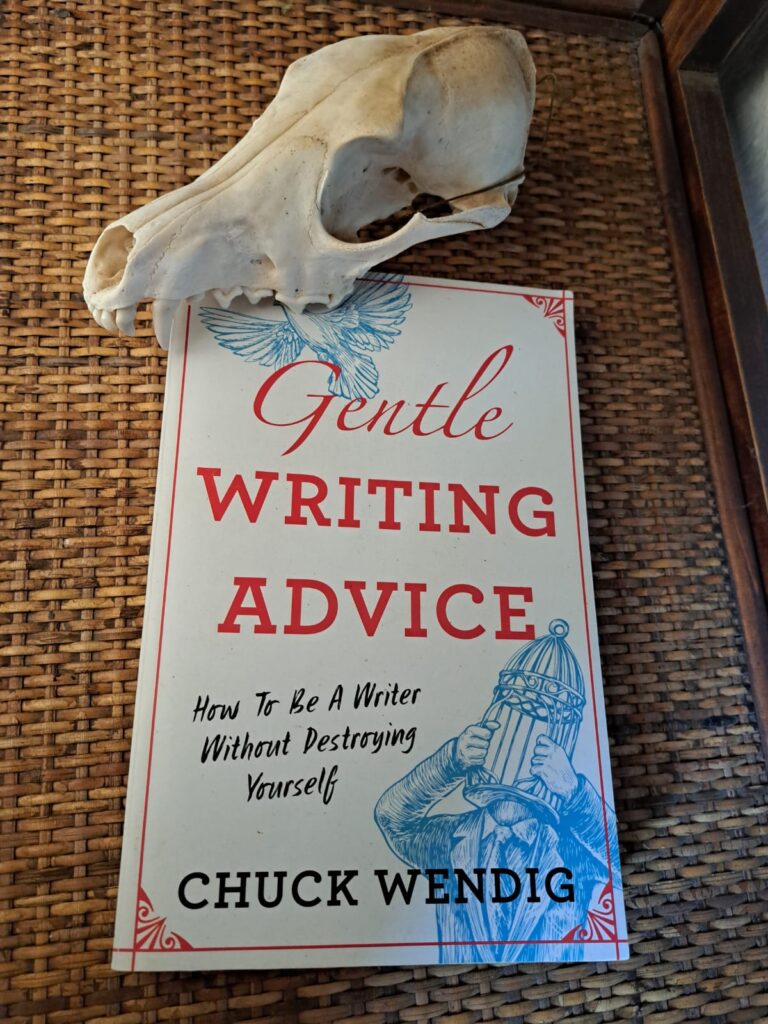
Gentle Writing Advise by Chuck Wendig
This book was the permission and support I needed for my writing, just when I needed it.
Let’s be honest here, the internet is full of rules about how to write, often boiled down to much used catechisms. There are a million books, podcasts, webinars, and courses, offering the very best advise on how to write a good story.
This, however, isn’t a book of writing advise, it’s a book of writing encouragement.
Instead of a bunch of how-to’s and rules this book offers a holistic approach to the craft of being a writer.
Wendig – a man who has written several best-selling ‘how to write’ books – categorically states that writing rules and advise are functionally useless. That all these maxims filling the pores of the internet are simply too prescriptive. After all, if there was a perfect formula for writing a great story we would all be doing it!
What works for one writer may not work for another ‘cos we are all different. Likewise every reader is unique, and what grabs them in a story is rarely definable or predictable. I have read plenty of books that were poorly crafted. This blog exists to rant about them after all, but many of those books have sold extremely well. Some of them I even enjoyed reading, while wincing at the clunkiness of the structure or the character caricatures.
Instead what this book is offering – advocating might be a better word – is self-care for writers. It is full of suggestions to guide writers towards a more mindful and holistic approach to their craft. Which you might remember from my journaling post is something that has become very important to me recently.
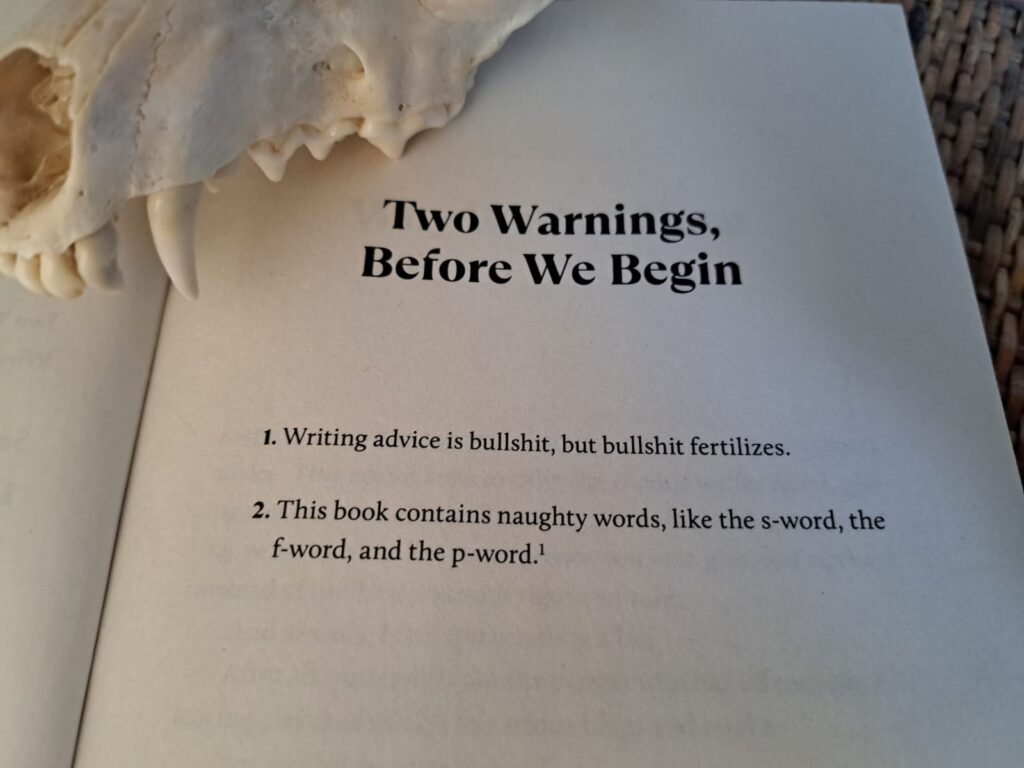
Why do you want it?
The key take home for me was to find and accept my why.
To finally accept that it doesn’t matter if my story is good. It doesn’t matter if anyone else will read it. It doesn’t matter what anyone else thinks of it.
I am writing because I want to write.
Because, I want to get the stories out of my head. Because I love that feeling when the words (and therefore time) just flow away and when you come back an hour has passed and your eyes feel like they want to fall out your face. Bliss.
I write to get the words out.
Because in the silence of the page I can pretend that they were heard, or perhaps in the silence of the page it stops mattering if they were heard. After all; if a tree falls in a forest and no one is around to hear it, it still made a sound.
In much the same way I don’t ‘market’ this blog, because I don’t want to. Because that is not what it’s for. Maybe it will grow organically over time. Maybe there will come a time when it becomes necessary to do something more with it. For now it’s where I can talk books to my heart’s content, whether other people read it or not.
Who is it for?
Years ago, I had a discussion with someone close to me about why we create. He insisted that sharing the creation was an essential component of the process. That, as a creator, you would not be satisfied until you had shared it.
At the time this felt really profound and accurate – like I could look back to times with other crafts and reflect on how much more I had enjoyed them when there were people around to show the results to. How the fun went out of them without the feedback loop of other’s engagement.
But looking back on it now I feel like an idiot. Why did I need their approval to enjoy making jewelery? I didn’t. It was just a form of looking for validation.
AND I DON’T NEED IT.
I didn’t realise it until reading this book, but I needed to do the same for writing. I needed to let go of the need for the validation of others. Their opinions don’t matter.
ONLY MINE DOES.
The expectations of others should not enter into your process. Because you are allowed to make a mess – you know why? Because it’s your mess in your house.
You are not working hard enough
This book gave me permission. No, it allowed me to give myself permission. To not care about how productive I was being, what I had to show for my writing time. We all have such an obsession for productivity. That was, after all, the entire premise of the NaNoWriMo movement. We all beat ourselves up about it.
And it’s stupid. Writing is not your boss, there isn’t going to be a raise for getting extra words down.
I learned to just prioritise doing the thing I love, in a way that satisfies me.
I will write until I feel the story is ready.
And then I will decide if I want to share it. I will decide if I want to hear what other people think about it (ie. reviews) and whether I care what their opinions are. At the end of the day it’s my leisure time to do with how best I please.
Okay I’m done preaching now. This is my new WRITING MANIFESTO. It has given me the space to breath and to enjoy my writing. I hope others can take away something from it too.
But What About…
But if you are still here then I think I should probably tell you about the book itself, shouldn’t I?
The other big takeaway from the book was to not get too hung up on your process. That the way you tackle a project will change, because different kinds of stories have different needs, and because you as a person will also be changing.
Wendig ends his book by taking many of those great writing rules and deconstructing them, looking to investigate what people commonly think they mean, what they actually/probably mean and why you shouldn’t worry that much about them in the first place. Ideas like:
The Starving Artist – it’s a lie, all writers have a day job.
Novelty of ideas – you are the novel part, dumbass. Every other trope and plot twist has been done by somebody else somewhere else.
Just Write and Just Read – Throwing words on the page (or into your head) doesn’t mean anything if it is not done with mindfulness. Every opportunity to write/read is one to practise your craft and study its nuances.
Writers Block – usually symptomatic of either a story problem or a personal problem. And that’s okay, its normal. Go have a coffee and watch some birds.
The Sunk Cost Fallacy – it’s okay to walk away. Sometimes the germ of the idea is there but the inner material needed to grow it to a tree will only be acquired in a few years time.
Self Doubt and Imposter Syndrome – let it go, let it go…
He dives into many more: dialogue tags, prologues, show don’t tell, kill your darlings, etc. All of which come back to use them if it feels right for the story and remember moderation is a thing.
This book came to me at the perfect time, dovetailing into the efforts I was already taking towards greater mindfulness. It was many of the same principles being applied to my greatest passion, how could that not resonate with me?
In the end its message is simple: don’t ask for anyone’s permission, have fun and throw the Fucks out of your BASKET.