OR IS IT?
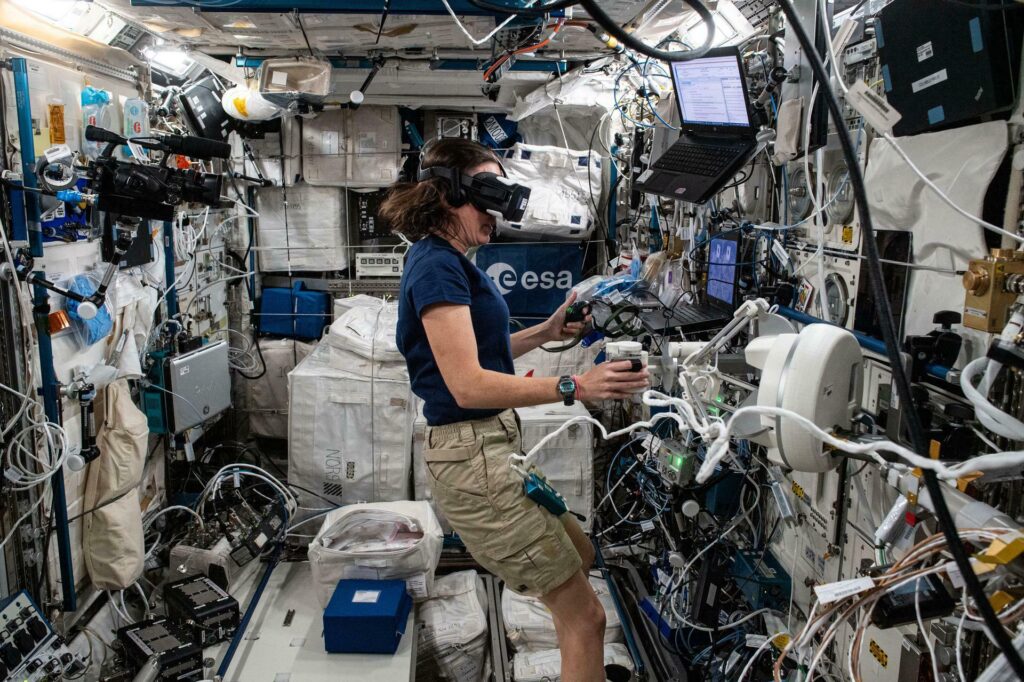
NASA
What comes to mind when you hear the word archaeology?
It probably has something to do with old things or the past. You may be imaging men with bushy beards digging in the dirt (which is still how my father describes my chosen profession). What I am sure you will not be thinking about is anything involving outer space.
Archaeology is defined as:
the scientific study of material remains (such as tools, pottery, jewellery, stone walls, and monuments) of past human life and activities
Mirriam-Webster Dictionary
or as:
the study of the ancient and recent human past through material remains. Archaeologists might study the million-year-old fossils of our earliest human ancestors in Africa. Or they might study 20th-century buildings in present-day New York City. Archaeology analyses the physical remains of the past in pursuit of a broad and comprehensive understanding of human culture
Society for American Archaeology
Note the emphasis in both definitions of PAST human material remains.
And yet Space Archaeology exists and no it does not involve ancient aliens – yet.

https://issarchaeology.org/blog-iss-archaeology/
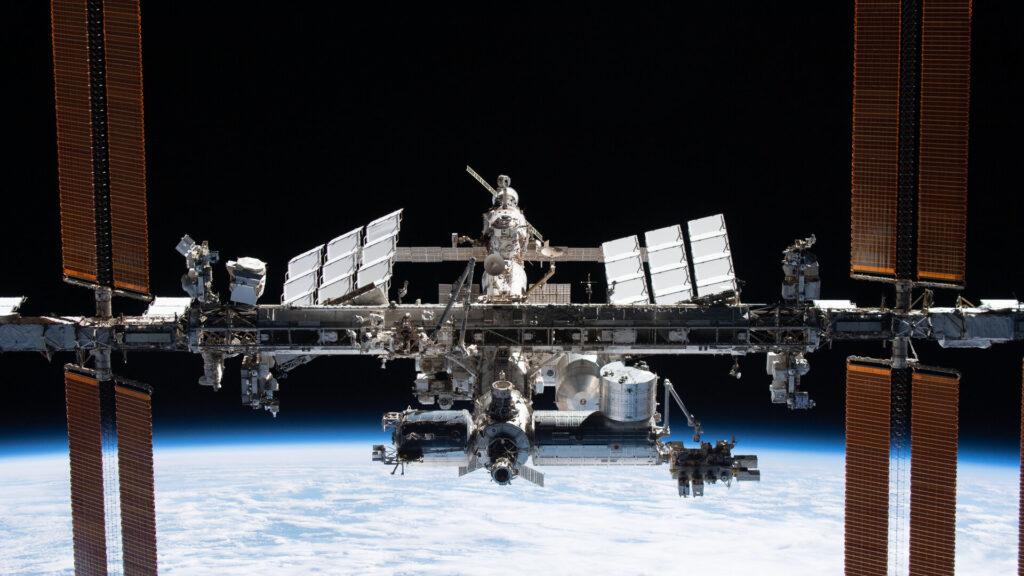
The International Space Station Archaeological Project
There have been some buzzy articles going around recently involving space archaeology, a title which nearly caused me to choke on my morning coffee and raised the immediate question – how can you have archaeology in space? A place which by definition has neither people nor a past.
Lets take a look at what this ‘space archaeology’ thing is purported to be. It is being undertaken by a multidisciplinary group of researchers (all employed academics – these are not tin-hat people) under the project name: The International Space Station Archaeological Project (ISSAP). It has the support of both NASA and CASIS (Center for Advancement of Science in Space – who manage external research on the International Space Station (ISS)). That is to say, all this stuff is legitimate and supported by the powers that be in space.
They are, as they describe it, taking an archaeological approach to studying cultural patterns and social relationships and how those interact with technology. They want to move outside the scope of standard histories, and investigate the effects of living in a space station on the social behaviour and culture of the astronauts.
Did I mention they have already (on the strength of just a few scientific papers) won a bunch of awards: Co-Pi’s chosen of Explorers Club 50 of 2024; 2023 New Directions Award from the American Anthropological Association; Outstanding word in digital archaeology from the Archaeological Institute of America.
Okay, that’s fine. Absolutely, something people should be looking at. Although I rather assumed that NASA was already doing so; if only to avoid a scenario where someone has a mental breakdown and destroys their very expensive machinery. But, I again raise the question, how is this archaeology?
ISSAP recently published a scientific paper in Plos One purporting to be the first-ever archaeological survey in space. How exciting. How hubristic. But, let’s examine what they did shall we? The survey consisted of marking out a series of 1 x 1 m squares in various areas of the ISS, on the walls, tables, in work and leisure areas, etc. Then each of these squares is photographed daily to build up a pictoral timeline of how the space is utilised. The researchers liken the successive pictures to the excavation of stratigraphic layers, or contexts. The objects that appear within the space as cultural artifacts and the space itself as the decayed walls of an ancient city. And then they claimed they looked for patterns and interrelationships through and between those contexts, which enabled a vision or story.
In other words. They had astronauts measure and tape out squares (with materials already aboard the ISS). Then they had them photograph those areas once a day. When the researchers got the images they categorised the objects in the pictures and then make inferences about how the space was being used by the astronauts. And therefore how they have adapted to living in a space station. They further compared the actual use of the space against its intended use by the engineers. The point being to understand how to better design future space stations.
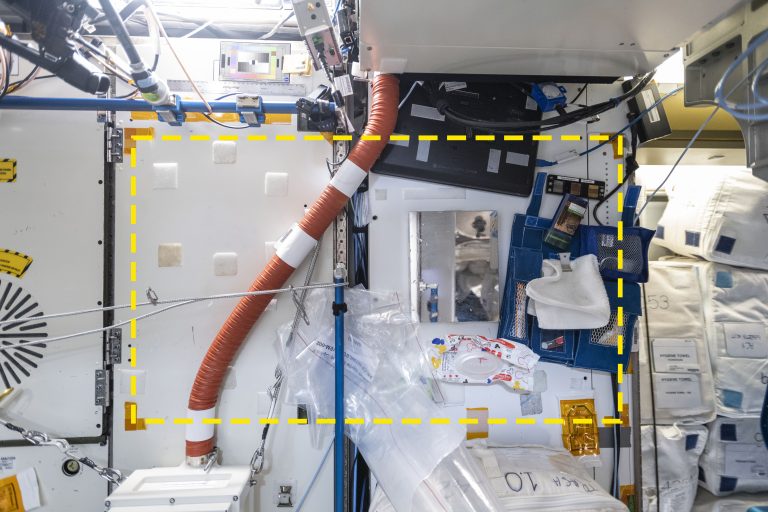
https://issarchaeology.org/blog-iss-archaeology/
So is this Archaeology?
Archaeology looks to answer questions like: What is this object? What is it used for, or what is its cultural significance? What can we infer about the culture and people from the object and its context?
It is extremely rare in archaeology to know the true meaning of cultural artefacts; an engraved ostrich eggshell container can simply be a vessel for carrying water or it can have shamanistic or spiritual qualities. Sometimes the context can help, if other ritualistic objects are nearby then the weight of evidence suggests shamanism. Or if the use of the space is known; a bakery in Pompei, for example, will contain objects related to food preparation.
Contexts can form snapshots, like in Pompei – a single moment in time; where the questions relate to how did these people respond to the disaster? What did life in Pompei look like on a normal day (before the trouble started)? Mostly though, stratigraphic layers represent periods of time – time that is averaged out – containing objects from days or years aggregated together (depending on how fast the sediments accumulated around them). A major point of most archaeological excavations is understanding how things changed over time. Tracking from the middle-stone-age layers of a cave sequence into the later-stone-age layers, how do the tools and objects change? What does this tell us about how early humans developed cognitively, socially?
In ISSAP’s study we already know all of this. We not only know what the artifacts are, we know their social value; every object in the picture is identifiable and trackable. Furthermore, we know what the space was intended for. These pictures are not recording successive layers of archaeological occupation, they are effectively a timelapse showing usage patterns.
This is archaeology only in the same sense that raiding Tutankhamun’s tomb was archaeology. Where the contexts and relationships were pristine. The story was already known, it just supported the findings of other sources. It is profoundly not reflective of 99% of archaeological research.
So, I’m sorry kids, but this is not archaeology. Its an analysis of space use. That my friends is called ergonomics.
an applied science concerned with designing and arranging things people use so that the people and things interact most efficiently and safely
Mirriam-Webster Dictionary
But I grant you Space Ergonomics doesnt sound nearly as sexy
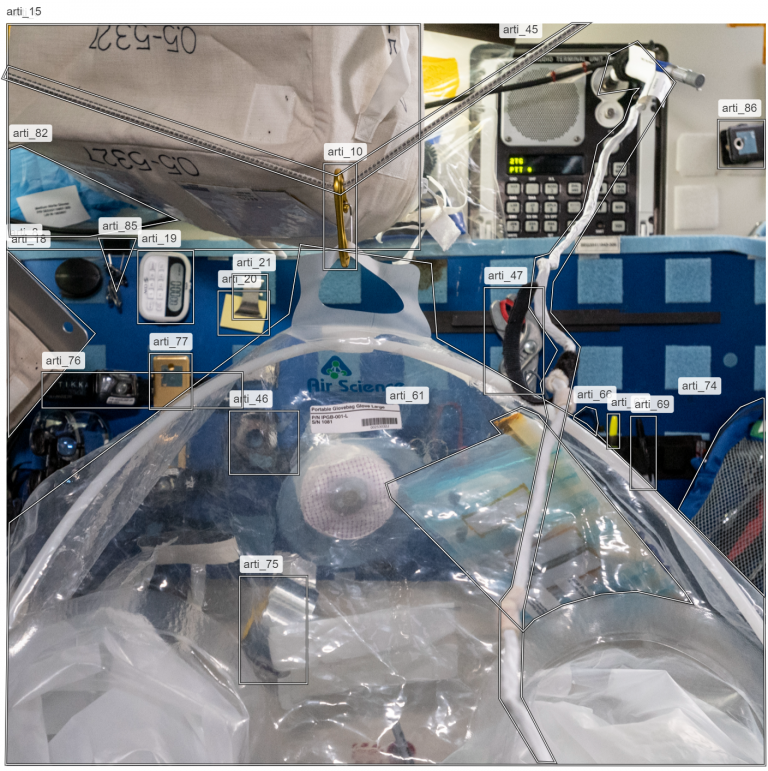
https://issarchaeology.org/blog-iss-archaeology/
So is it at least Useful?
Arguably this article is picking a fight over semantics. Does it matter if they want to call it archaeolgy? I will come back around to that, but first I want to explore what novel information the study is offering, if any.
The obvious problem with this study is that the people we are supposedly studying are still alive. Why do we need to do an analysis on space use when we could just ask the astronauts? These people are living in cramped quarters, in microgravity, with people they may not know or like, and they are up there for months at a time. I am damn sure they have strong opinions on how best to design the space for their needs.
The researchers acknowledge this but argue that their results are “not reliant on the [astronauts] or their abilities and willingness to describe what was happening in this moment or across 60 days of moments accurately”, and they wont have to wait months for them to return to earth, when their memories may have already have become imperfect. I would be careful of taking such a grandiose point at face value, because archaeological research and the people who undertake it, have their own biases. Furthermore, the astronauts are taking the photos – that is the test subjects running the study – that is a place for potential bias if ever there was one.
Given this, I am finding it increasingly difficult to see what information this study could be producing that was entirely unknown to NASA. Rather, what it presents is an independent analysis of the work being carried out by the various space agencies. It adds to that knowledge and can find omissions, but is any of this information truly new or spectacular? Debatable, but it is in its own way oversight about what these people are getting up to out there.
@ESA; Photo NASA/ESZ-T. Pesquet
https://www.esa.int/ESA_Multimedia/Images/2021/11/Cosmic_pearl
So What Should Space Archaeology Be?
If we use space archaeology as ISSAP is doing, then what are we going to call the study of alien ruins?
Just kidding.
But I do want to dig into the semantics a bit because ISSAP didn’t actually come up with that term. Space Archaeology was already being used as a catchall phrase to describe a wide array of remote sensing technologies (which are applied from space or low earth orbit) like Lidar and radar scanning. There are already text books named Space Archaeology outlining the current advancements in the field.
Furthermore I would argue that there is research going on that far better reflects a useful meaning for space archaeology:
For example, geochemists have been studying lunar rocks or soil samples from other space sources for decades; which lead recently, to the publication of an analysis of the makeup of the meteorite that wiped out the dinosaurs (the meteorite was vaporised on impact, but scientists have analysed the thin layer of dust deposited around the globe by the impact). That’s the study of a object from space and how it affected our world in the past, with some suggestions for possible future impacts (if NASA ever has to push another asteroid with the same makeup out of a impact trajectory – I’m serious that was the conclusion of the study).
In another example, researchers coined the phrase ‘planetary geoarchaeology’ (note the specificity of the name) for the study of the objects and imprints human leave behind on planets; specifically for evaluating the physical and human processes that can alter, destroy, or preserve space heritage. An example would be preserving the moon landing site, the footprints and artefacts (like a photograph) left there. Preseving past human behaviour and culturally important sites, check. Humans have by this point left quite a bit of ‘rubbish’ littering various planets (like defunct mars rovers) and in orbit (satellites and their parts) and this material will also at some point need to be dealt with.
These examples are not strictly archaeology in the traditional sense either; but, they are applying real archaeological methodologies, to ask archaeological (or palaeontological) questions. And who knows maybe one day humans will find evidence of ancient aliens on other planets and space archaeologist will be a term that actually means something.
ISSAP and their collaborators are doing real research, but they are grossly overprojecting the value and novelty of their findings. And what irritated me, being misleading in presenting their research as archaeology. It is click-baiting research and that is never a good sign.
Space Archaeology does sound exciting, but this isnt it.