Lessons from a Fundraising Workshop and NPO networking event
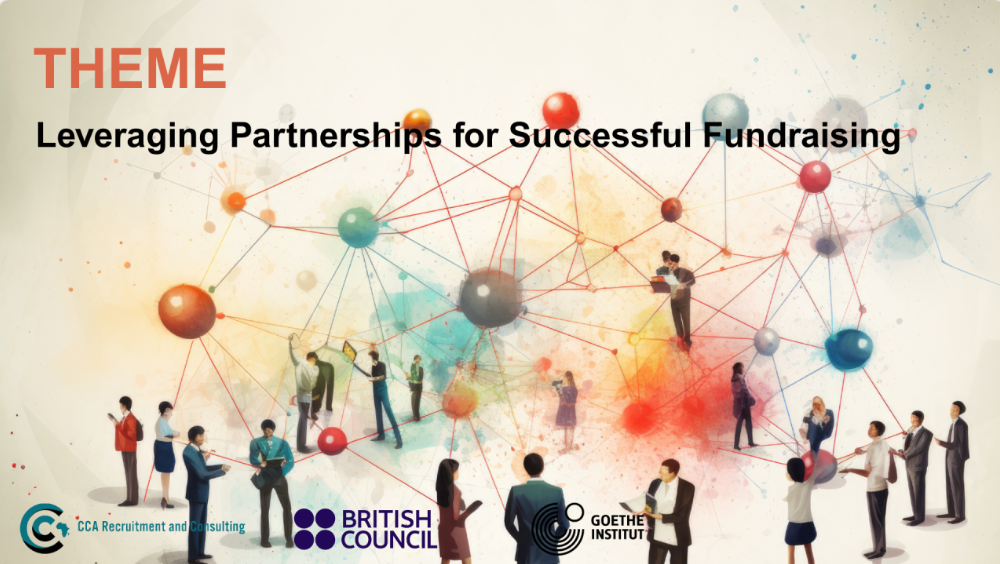
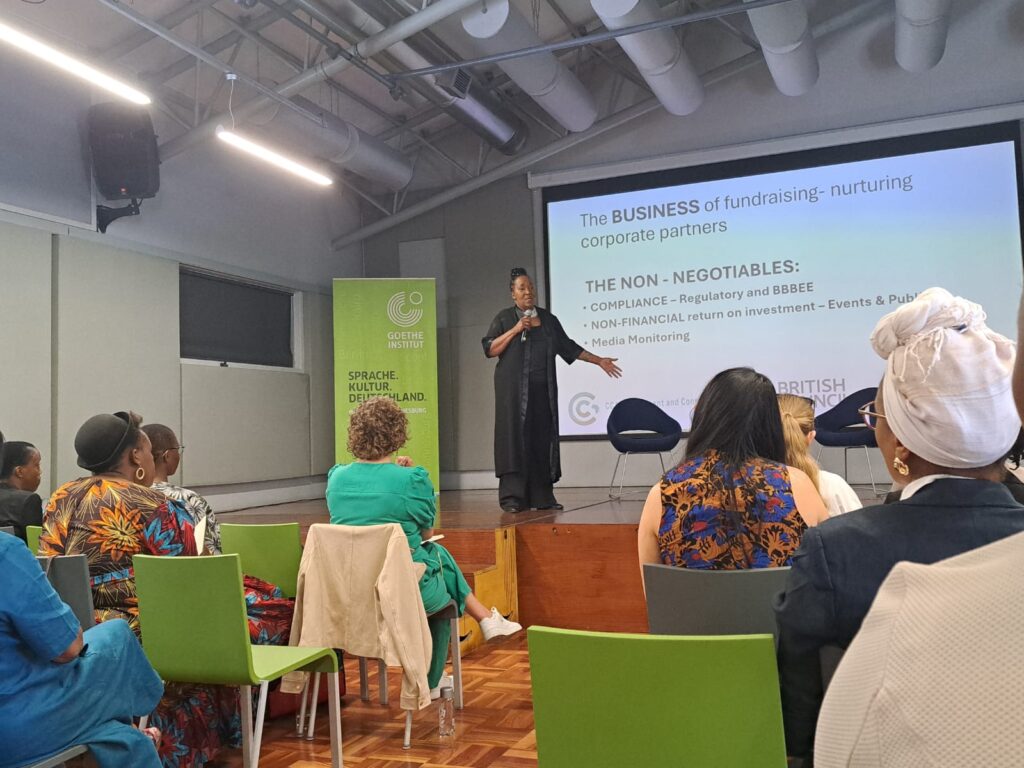
Event: Leveraging Partnerships for Successful Fundraising . Hosted by CCA Recruitment, Goethe Institute and the British Council
Raising funds for research is always hard, and for the most part academics tend stay in their lane, focussing on institutional sources whose systems feel familiar. Excepting those individuals who leverage social media and crowd-funding – I suspect half of us consider those people lunatics, and the other half untouchable mavericks. I know I thought of it this way, and that was to the detriment of myself and of my institution. The truth is I was afraid of it.
But I have had the opportunity in recent months to start expanding my networks, to look outside my box at the wider world and what it offers. This article is a reflection on a networking event for the non-profit sector I attended. An event that opened my eyes. I want to share with you what I learned about fundraising, and why it matters to research management and academia. Because fundraising is like any other project, it’s a matter of people, processes and systems.
Process
There is nowhere to go for funding.
I have heard many academics say this, I believed it too, but it’s bullshit. The non-profit sector exists to show you how much non-sense that sentiment is. There are millions of generous people out there, thousands of corporates looking to give back (or, you know, launder their reputations). The problem was my fancy degree wasn’t going to find them, nor was a cursory Google search. What I needed to do was step outside my tower and go talk to some actual humans. Because fundraisers, NPOs (non-profits), and even corporates have systems in place for this.
You are probably thinking, yeah that still doesn’t answer my question, WHERE?
Many big corporates will have a whole department called something like social/enterprise/investor relations (I know, but it makes sense to them) and in that department will be people and systems to guide you through a pitch – this is admin not nuclear physics.
Connect, connect, connect.
Consider every possible angle on your industry, your mission, your value proposition. Find the places, institutions and people with similarities, with links – no matter how tenuous. Connect in person or online. Study your competition, study other industries, get on the websites, the social media, the blogs, what are they doing and could you do it?
Pitching sounds scary!
It is, it’s scary and it’s hard, but the most important thing to remember is that it’s not about you – you are merely the representative, the messenger for a larger cause. If you believe in it, they will see it.
Then it’s important to consider the needs of your prospect. What are their priorities – the regulatory concerns (think tax), and what is the intrinsic value to them. You need to have a plan to make sure they get something valuable out of it, and you need to explain it in a way they will understand. Talk business language to business people. Talk to their marketing department, set up systems for monitoring media and engagement, make sure you have built publicity and events into whatever your campaign is. Executives like numbers. You can’t take warm fuzzy feelings to the bank, but you can quantify likes and mentions.
Fundraising is hard, but we don’t need to make it harder by reinventing the wheel. So, buy your NPO/fundraiser contact a bottle of wine before you start squeezing them for suggestions.
People
The organisers emphasised that people are the key to successful fundraising. Finding the right connections within an organisation and nurturing authentic relationships with them. You don’t need the gift of the gab here, you need empathy and compassion and to take an interest. Because at the end of the day corporates are run by people. Big executive people and small obscure people, sometimes it’s the PA who will get your proposal on the big man’s desk or the driver who will be able to tell you if the minister is actually going to show to your event. It really is about people.
My take-home was less focussed on finding that ideally placed cheerleader within an organisation, but more on the importance of finding people outside your organisation, your circles who have the experience and the skills and the knowledge to help you solve your problem (whether that is finding funding, or a job, or advise) there is a lot of expertise not attached to a degree out there.
Story
It is hardly a surprise, given my interests, I particularly enjoyed the discussions regarding how you package your story. I was struck by the many similarities with every other kind of storytelling or article writing I have studied. It’s about finding the right angle and the human connection.
Your first step is to look for resonance. Corporations don’t just sell goods or services, what distinguishes them are aspirations. Nike sells sneakers, but their tagline is aspirational: Just do it. If you can tap into those aspirations, even tenuously, you will be halfway there.
But be careful not to lose your authenticity to the needs or aspirations of others. It’s something I have found myself thinking about a lot as I work on finding my voice as a writer, as I engage with social media. I have to consider who am I, what I want, what am I prepared to put on the line.
But the really mind-bending realisation to come from the whole day was this: what you are selling isn’t the outputs, it’s the outcomes. Take a moment to say that again, outcomes.
You are not selling a minibus to take children in need on excursions, you are selling the effects of those trips on the families, the moms who can go to work, the families that can spend time together. You aren’t selling the dozen or so fossils you might find, you are selling the future implications for science and humanity, you are selling the spirit of excursion and discovery (go check out the marketing of National Geographic if you don’t believe me).
This is the game-changer, because there is no industry or situation it does not apply to. It’s the angle behind any scientific article, outreach attempt, funding campaign. What will be the positive effect on real people? What is the aspiration that will excite them? Afterall what Captain of Industry wasn’t obsessed with dinosaurs when he was four, what adult didn’t wish she could be Indiana Jones when she grew up?
We Need Diversity
The statement that struck me hardest was potentially the most obvious – your funding needs to be diversified, because at the end of the day your enterprise needs to be sustainable. That caught me right under the ribs.
Networking isn’t just some buzz word fundraisers and marketers throw around; its value is much greater than I ever credited. Because in diversifying our networks we open ourselves up to new ideas. We find people with expertise we didn’t realise we needed.
I think about a number of research/outreach institutions that are being run by academics (or administrative pencil-pushers) and failing slowly. I think about ones that have already been lost. Academics with good intentions, but no understanding outside their very focussed expertise. Academics who are in over their heads. We need to acknowledge that we don’t have all the answers (and that is a good thing). We need to open our minds and our hearts to the expertise and experience of others. No more hiding behind excuses like they (the institute) can’t afford it. You can’t afford not to have it.
I leave with a renewed passion for making science work, and many new ideas for the places scientists need support. With the knowledge that whatever happens next, I need to continue this journey of expanding my knowledge and circles to outside industries. Because science and research don’t exist in a vacuum, they contribute to the world, and the world contributes equally to them. We need to diversity our communities because we all have something amazing to share.